
- Applies to: United Kingdom
- ✓ Verified Nov 3, 2026 · 1 official source
HMRC Compliance Desk · UK Sole Trader & Self Assessment Rules
Under HM Revenue & Customs (HMRC) rules for "Freelancer Invoice UK: HMRC Self Assessment SA103, £90,000 VAT & Allowable Expenses Guide for Freelancers, Consultants & Sole Traders (2026/27)", UK sole traders operate on the 6 April to 5 April tax year (default cash basis from 2024/25), claim allowable "wholly and exclusively" expenses or the £1,000 Trading Allowance, and file an online SA100/SA103 Self Assessment return with Payments on Account due 31 January and 31 July.
Key Takeaways
- HMRC Simplified Mileage Rate: Claim 45p/mile on the first 10,000 business miles (£4,500 on 10,000 miles) and 25p/mile above 10,000 miles without tracking individual fuel/repair receipts.
- 2025/26 UK Tax & NIC Rates: £12,570 Personal Allowance (0%), 20% Basic Rate Income Tax plus 6% Class 4 National Insurance on profits between £12,570 and £50,270 (Class 2 NIC flat weekly charge abolished).
- Making Tax Digital (MTD for ITSA) & £90k VAT: Sole traders over £50,000 gross income enter MTD for ITSA in April 2026 (£30,000 in April 2027); compulsory VAT registration triggers at £90,000 rolling 12-month turnover.
“You must send a Self Assessment tax return if, in the last tax year (6 April to 5 April), you were self-employed as a sole trader and earned more than £1,000 before taking off anything you can claim tax relief on.”
Freelancer Invoice UK: HMRC Self Assessment SA103, £90,000 VAT & Allowable Expenses Guide for Freelancers, Consultants & Sole Traders (2026/27)
Short answer: A legally compliant freelancer invoice uk must display a unique sequential invoice number, your legal name and trading name, business address, client name and address, supply and issue dates, itemised services, and total payable in £GBP (plus your 9-digit VAT number and 20% VAT breakdown if your 12-month turnover exceeds the £90,000 threshold). For 2026/27 HMRC Self Assessment (SA103S), UK freelancers, consultants, and sole traders deduct 45p/mile vehicle travel, £10–£26/mo WFH flat rates, and 100% of wholly business software and gear.
⚡ Instant UK Sole Trader Invoice, HMRC SA103 & 45p/Mile Deduction Toolkit (
£GBP+🔗 Embed / CSV Template+ 5 Free Saves): Create a compliant £GBP UK Sole Trader Invoice (Non-VAT, 20% VAT, or 20% CIS Subcontractor) in our Free Online Invoice Generator, export via🔗 Embed / CSV Template, save up to 5 Free Saves in your iCloud Web Workspace, explore the UK Self Assessment SA103 App Store Edition, UK Sole Trader & VAT Edition, Consultants & Freelancers Edition, and Simple Bookkeeping & P&L Edition, or Download Keel on the App Store (£0/moCore).
Whether you issue a freelancer invoice uk as a designer, software developer, photographer, videographer, social media manager, or architect—or you bill clients as a management consultant, coach, personal trainer, estate agent, event organiser, boutique agency owner, or UK tradesperson—HM Revenue & Customs (HMRC) applies the same sole trader invoicing and Self Assessment (SA100 + SA103S / SA103F) rules across all self-employed individuals in England, Wales, Scotland, and Northern Ireland.
Below is the complete 2026/27 UK tax year (6 April 2026 – 5 April 2027) guide covering mandatory invoice fields, the £90,000 VAT registration threshold, SA103S allowable expense boxes, 45p/25p mileage, and Making Tax Digital (MTD for ITSA) preparation.
How do the 3 UK self-employed cohorts structure their invoices and HMRC SA103 records?
Every self-employed person in the UK registered for Self Assessment with a 10-digit Unique Taxpayer Reference (UTR) operates in one of three billing workflows supported natively by Keel on iPhone:
- Creative, Digital & Technical Freelancers (Designers, Developers, Photographers, Videographers, Social Media Specialists & Architects):
- Bill via 30%–50% upfront booking retainers, day rates (
£350–£850/day), milestone stages, or usage-rights licensing. - Deduct MacBook/camera equipment under the Cash Basis (default for UK sole traders from 2024/25 onwards) or Annual Investment Allowance (
AIA), Adobe/Figma/GitHub software (Box 23), studio hire, and HMRC Working From Home (WFH) simplified expenses (£10 / £18 / £26 per month) or actual home-office apportionment (Box 21).
- Bill via 30%–50% upfront booking retainers, day rates (
- Consultants & Solo Service Businesses (Coaches, Personal Trainers, Property Consultants, Event Organisers & Boutique Agencies):
- Bill via monthly retainers, 10-session coaching/PT blocks, or project management fees.
- Export a clean Year-to-Date Profit & Loss (
P&L) Statement and Paid Invoice Ledger via the Simple Bookkeeping & P&L Edition and Income Proof & Solo Business Edition alongside their HMRCSA302tax calculation when applying for a UK mortgage or tenancy.
- Independent Service Providers & UK Tradespeople (Builders, Plumbers, Sparkies, Chippies, Painters & CIS Subcontractors):
- Quote on-site, issue numbered invoices with separated labour and materials (including 20% CIS deductions where applicable under our UK CIS subcontractor invoice guide), and log
45p/mile(first 10,000 business miles) and25p/milethereafter (Box 20).
- Quote on-site, issue numbered invoices with separated labour and materials (including 20% CIS deductions where applicable under our UK CIS subcontractor invoice guide), and log
What must be included on a freelancer invoice UK (Non-VAT vs VAT-Registered)?
Under GOV.UK invoicing rules, every freelancer invoice uk issued by a sole trader must contain specific legal disclosures depending on whether your rolling 12-month VAT taxable turnover is below £90,000 or has crossed the UK £90,000 VAT registration threshold:
| UK Invoice Field | Non-VAT Sole Trader (< £90,000 Rolling 12-Month Turnover) | VAT-Registered Sole Trader (Simplified Invoice ≤ £250 inc. VAT) | VAT-Registered Sole Trader (Full VAT Invoice > £250) |
|---|---|---|---|
| Unique Sequential Number | Mandatory (e.g., INV-2026-042) | Mandatory | Mandatory |
| Your Legal Name & Trading Name | Mandatory (Sole traders using a business name must also display their own legal name) | Mandatory | Mandatory |
| Your Business Address | Mandatory (Address where legal documents can be served) | Mandatory | Mandatory |
| Client Name & Address | Mandatory | Optional on simplified receipt (≤ £250) | Mandatory |
| Invoice Date & Supply Date | Mandatory (Issue date + date service was delivered) | Date of supply | Issue date + Tax Point (time of supply) |
| Description of Services/Goods | Clear breakdown of hours, day rate, or deliverables | Description of goods/services | Itemised quantity, unit price ex-VAT, and description |
| VAT Number & 20% VAT Math | Do NOT show VAT (£0 VAT; optional note: “Not VAT registered”) | 9-digit GB VAT # + VAT rate (20%) + total inc. VAT | 9-digit GB VAT #, net ex-VAT subtotal, 20% VAT amount, and gross total |
| Payment Terms & Bank Details | UK Sort Code, Account Number, and due date (or statutory 30-day late payment notice) | Payment method / terms | UK Sort Code, Account Number, and payment due date |
See our full UK sole trader invoice requirements guide and how to invoice as a sole trader in the UK for downloadable templates.
How do UK freelancers, consultants, and sole traders map expenses to HMRC SA103S (2026/27)?
If your annual self-employed turnover is below £90,000, you can file the short 2-page HMRC Form SA103S (Self-employment (short)); if your turnover is £90,000 or more, you use SA103F (Self-employment (full)). Under HMRC’s wholly and exclusively rule (ITTOIA 2005 s.34), you can either claim the flat £1,000 Trading Allowance (if your total expenses are under £1,000) or deduct your actual allowable expenses across SA103S Boxes 17–30:
SA103S Box Number | Official HMRC Expense Category | 2026/27 Rules for Freelancers, Consultants & Sole Traders |
|---|---|---|
| Box 17 | Cost of goods bought for resale or goods used (Materials & Subcontractors) | Direct project materials, stock, photographic prints, or subcontractor fees. |
| Box 20 | Car, van and travel expenses (Simplified Mileage or Actual Costs) | 45p per mile for the first 10,000 business miles in the tax year (6 Apr – 5 Apr), then 25p per mile above 10,000 miles (plus train/tube/flight fares, congestion charges, and business parking). See UK self-employed mileage allowance. |
| Box 21 | Rent, rates, power and insurance costs (Home Office / Studio) | Studio/co-working rent OR HMRC Working From Home (WFH) flat rate: £10/mo (25–50 hrs/mo), £18/mo (51–100 hrs/mo), or £26/mo (101+ hrs/mo) — or actual floor-area/time proportion of domestic heating, electricity, and council tax. |
| Box 23 | Phone, fax, stationery and other office costs (Software & Tech) | Business mobile contract, broadband business-use %, Adobe/Figma/cloud software subscriptions, postage, and office supplies. |
| Box 24 | Advertising and business entertainment costs | Website hosting, Google/Meta ads, portfolio costs, and marketing (Note: client entertainment/hospitality is 0% tax-deductible for HMRC Income Tax). |
| Box 27 | Accountancy, legal and other professional fees | Accountant fees for preparing your accounts, legal fees for contract reviews, and professional indemnity / public liability insurance. |
| Box 28 / Capital | Equipment, laptops, cameras & tools (Cash Basis / AIA) | Under the default Cash Basis, computers, cameras, lenses, and tools are deducted immediately as a normal expense when paid (except cars). See HMRC capital allowances & AIA guide. |
What are the 2026/27 UK Income Tax, Class 4 National Insurance, and Payments on Account rules?
On your net taxable sole trader profit (Turnover Box 9 minus Allowable Expenses Box 31 on SA103S), HMRC calculates both Income Tax and Class 4 National Insurance Contributions (NICs):
- Personal Allowance (
2026/27):£12,570(0%tax up to£12,570; tapers by£1for every£2of adjusted net income over£100,000). - England, Wales & Northern Ireland Income Tax Bands: 20% Basic Rate (
£12,571 – £50,270), 40% Higher Rate (£50,271 – £125,140), 45% Additional Rate (over £125,140). (Scottish taxpayers pay the 6 Scottish Income Tax bands from19%to48%). - Class 4 National Insurance (
2026/27): 6% on annual profits between£12,570 and £50,270, plus 2% on profits above£50,270. (Compulsory Class 2 NICs have been abolished; sole traders with profits above£6,725automatically receive National Insurance state pension credits at£0cost). - Payments on Account (
31 January&31 July): Once your Self Assessment tax and Class 4 NIC bill exceeds£1,000(and less than 80% of your tax was collected at source via PAYE/CIS), HMRC requires two 50% advance Payments on Account toward next year’s bill on31 Januaryand31 July. See our UK Payments on Account explained guide.
How does a London freelance designer and consultant calculate net SA103 profit and tax?
Consider a London-based freelance designer and brand consultant under the £90,000 VAT threshold in the 2026/27 tax year:
- Gross Sole Trader Turnover (
SA103S Box 9):£68,000 - Allowable Business Expenses (
Boxes 17–30):- Box 20 (Simplified Mileage):
3,200 business miles × 45p/mile=£1,440+£380client rail travel =£1,820 - Box 21 (Working From Home Flat Rate):
12 months × £26/mo(101+ hrs/mo) =£312 - Box 23 (Software, Cloud, Phone & Broadband Business Share):
£2,180 - Box 27 (Professional Indemnity Insurance & Accountancy):
£840 - Box 28 / Cash Basis Equipment: MacBook Pro & Studio Display upgrade =
£3,100
- Box 20 (Simplified Mileage):
- Total Allowable Expenses (
Box 31):£8,252 - Net Taxable Profit (
Box 31 / Profit):£68,000 - £8,252=£59,748
Frequently asked questions
Do I need to put my UTR number on a freelancer invoice UK?
No—you do not need to display your 10-digit Unique Taxpayer Reference (UTR) on standard B2B or B2C freelance or consulting invoices, and keeping your UTR off public invoice templates helps prevent identity fraud. The one exception is if you work in the construction industry as a CIS subcontractor, where your contractor needs your UTR to verify your 20% or 0% Gross Payment status with HMRC.
When must a UK freelancer or consultant register for 20% VAT?
You must register for VAT with HMRC if your total VAT-taxable turnover for the previous 12 rolling months exceeds £90,000, or if you expect your turnover to exceed £90,000 in the next 30 days alone. Below £90,000, VAT registration is voluntary; if you are not VAT-registered, you must never charge VAT or show a VAT line on your invoices.
Can I claim both the £1,000 HMRC Trading Allowance and actual business expenses?
No. For any given tax year on your HMRC SA103S return, you must choose either the flat £1,000 Trading Allowance or your actual allowable business expenses—never both. If your actual receipts, software subscriptions, WFH deduction, and 45p/mile business mileage total more than £1,000, claiming actual allowable expenses gives you a larger tax deduction.
How does Making Tax Digital (MTD for ITSA) affect UK freelancers and sole traders in 2026 and 2027?
From 6 April 2026, sole traders and landlords with qualifying gross income over £50,000 (based on the 2024/25 tax return) must keep digital records of their income and expenses and submit quarterly updates to HMRC under Making Tax Digital for Income Tax (MTD for ITSA). From 6 April 2027, the threshold drops to £30,000. Keeping every invoice, receipt, and mileage trip categorised digitally in Keel ensures your quarterly totals are always ready.
How long must UK freelancers and sole traders keep invoices and receipts for HMRC?
HMRC requires self-employed individuals to keep all invoices issued, expense receipts, bank statements, and mileage logs for at least 5 years after the 31 January submission deadline of the relevant tax year (for example, records for the 2025/26 tax year filed by 31 January 2027 must be kept until at least 31 January 2032).
| HMRC Self Assessment Line | UK Statutory Rule (6 Apr – 5 Apr) | £52,000 Turnover Example | Tax / Cash Impact (GBP) |
|---|---|---|---|
| Gross Sole Trader Turnover | Default Cash Basis (below £90k VAT threshold) | £52,000 invoiced & collected | MTD for ITSA applies >£50k |
| Allowable Expenses + 8,000 Business Miles | £6,400 materials/tools + 8,000 mi @ 45p (£3,600) | £10,000 total SA103 deductions | Reduces taxable profit to £42,000 |
| Income Tax (20% Basic Rate above £12,570) | (£42,000 - £12,570) × 20% | £29,430 taxable band | £5,886.00 Income Tax |
| Class 4 National Insurance (6% Main Rate) | (£42,000 - £12,570) × 6% (Class 2 abolished) | £29,430 NIC band | £1,765.80 NIC (£7,651.80 total due) |
Payments on Account (50% each on 31 January and 31 July) apply whenever your Self Assessment tax bill exceeds £1,000.
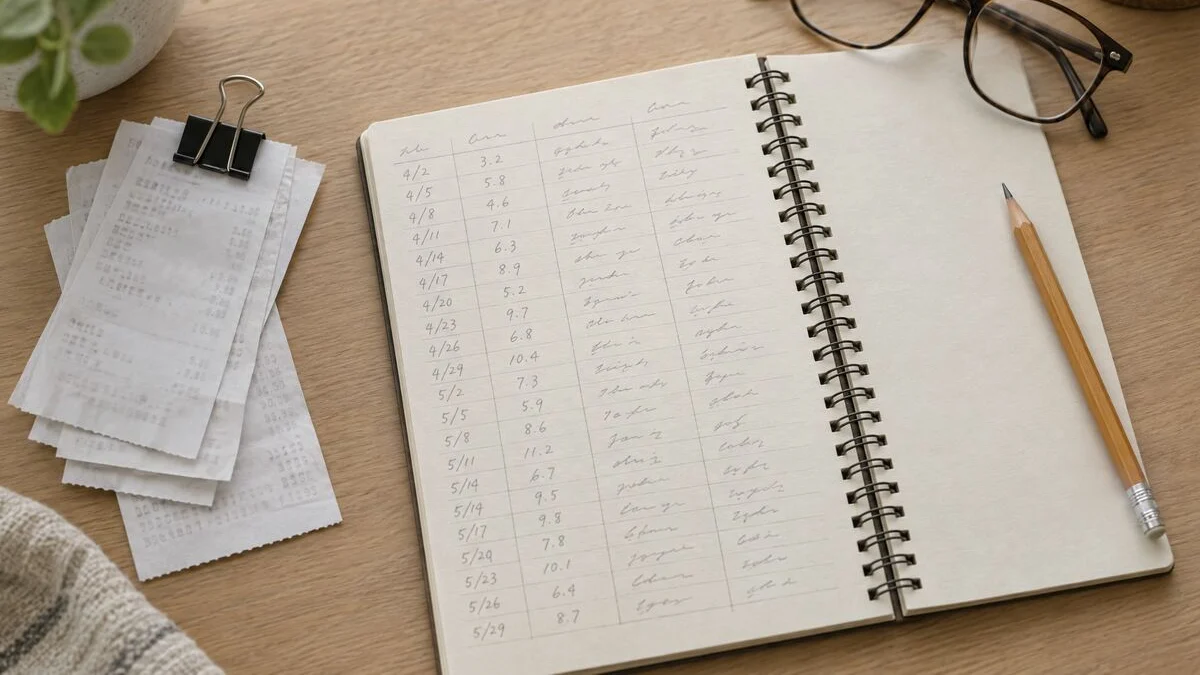
Create a Clean UK Sole Trader or CIS Invoice in GBP
Generate a professional UK sole trader or CIS subcontractor invoice PDF right in your browser with our free invoice maker and invoice creator.
Ready to bill the job?
Create and keep your invoices with Keel.
Pick the customer, add the lines, send a clean PDF.
Free to download · No bank connection · See invoices in Keel
How do I actually get paid?
Knowledge Graph · Interactive Mind Map