
- Applies to: Tasmania, Australia
- Contractors & trades
- ✓ Verified Nov 1, 2026 · 1 official source
Licensing & Compliance · Tasmania Contractor Rules
In Tasmania, contractor licensing is governed by Consumer, Building and Occupational Services (CBOS Tasmania) under Occupational Licensing Act 2005 (Tas) & Residential Building Work Contracts and Dispute Resolution Act 2016 (Tas), establishing a strict statutory threshold (CBOS Building Services Provider licence required for Builder (Low/Medium/Open); Occupational Licence required for Electrical, Plumbing, Gas-fitting, and Auto Gas; Residential Building Contract rules apply at A$20,000+) plus mandatory bond, fee, and qualification requirements (Mandatory Professional Indemnity ($1M) / Public Liability ($5M) insurance for CBOS Building Services Providers + statutory 5% deposit cap on residential contracts ≥A$20,000).
Key Takeaways
- Statutory threshold: CBOS Building Services Provider licence required for Builder (Low/Medium/Open); Occupational Licence required for Electrical, Plumbing, Gas-fitting, and Auto Gas; Residential Building Contract rules apply at A$20,000+. Contracting above this limit without an active credential voids lien rights and triggers administrative fines.
- Bond & registration requirements: Mandatory Professional Indemnity ($1M) / Public Liability ($5M) insurance for CBOS Building Services Providers + statutory 5% deposit cap on residential contracts ≥A$20,000.
- Qualification pathway: Builders require Certificate IV / Diploma in Building and Construction plus 2–6 years practical experience; electricians and plumbers hold CBOS Practitioner and Contractor licences.
“Under the Residential Building Work Contracts and Dispute Resolution Act 2016 (Tas), residential building work contracts valued at A$20,000 or more require a written contract, a CBOS-licensed building services provider, and a maximum deposit of 5%.”
Tasmania Contractor License Requirements 2026 (CBOS): Thresholds, Exams & Trade Rules
Short answer: Under Occupational Licensing Act 2005 (Tas) & Residential Building Work Contracts and Dispute Resolution Act 2016 (Tas), tasmania contractor license requirements are enforced by Consumer, Building and Occupational Services (CBOS Tasmania). Specifically, In Tasmania, Consumer, Building and Occupational Services (CBOS) licenses Building Services Providers (Builder Low/Medium/Open, Demolisher, Fire Protection) for structural and permit-regulated building work over A$20,000, and mandates an Occupational Licence at any dollar value ($0 floor) for Electrical, Plumbing, Gas-Fitting, and Automotive Gas work.
⚡ Instant Tasmania Tradie ABN Tax Invoice, 10% GST & CBOS Record Toolkit (2026–27): Create a compliant Hobart or Launceston quote or ABN tax invoice (with 10% GST and Tasmania’s 5% residential deposit cap on A$20k+ jobs) on the AU & NZ Tradies App Store Edition, save up to 5 Free Saves in your iCloud Web Workspace (or click 🔗 Embed / CSV Template), or download Keel for iPhone on the App Store (
$0/moAU & NZ Tradie Edition) to stamp your CBOS licence number onto every PDF estimate and invoice.
In addition to meeting trade exam and experience rules, contractors must satisfy Mandatory Professional Indemnity (A$1,000,000) and Public Liability (A$5,000,000) insurance for CBOS Building Services Providers, plus a strict 5% statutory deposit cap on residential building contracts of A$20,000 or more and print their required licence or registration details on estimates and invoices across Hobart, Launceston, Devonport, Burnie, Kingston, and Ulverstone.
Every contractor expanding into Tasmania—or transitioning from employee to independent operator in Hobart, Launceston, Devonport, Burnie, Kingston, and Ulverstone—has to answer one question before writing their first bid: which work triggers a mandatory licence, and which agency enforces it? In Tasmania, regulation runs through Consumer, Building and Occupational Services (CBOS Tasmania) under Occupational Licensing Act 2005 (Tas) & Residential Building Work Contracts and Dispute Resolution Act 2016 (Tas). Getting the boundary wrong does not just risk an administrative citation; it can invalidate your customer contract and strip away your right to enforce payment. Below is the complete 2026 breakdown of tasmania contractor license requirements, how the thresholds apply across building, electrical, plumbing, gas-fitting, roofing, and residential renovation, and how to keep your paperwork compliant. For the companion rules in Tasmania, see tasmania contractor insurance requirements and victoria contractor license requirements.
Who needs a contractor license in Tasmania in 2026?
The first rule of tasmania contractor license requirements is separating general building/remodeling thresholds from compulsory trade credentials.
In Tasmania, Consumer, Building and Occupational Services (CBOS) licenses Building Services Providers (Builder Low/Medium/Open, Demolisher, Fire Protection) for structural and permit-regulated building work over A$20,000, and mandates an Occupational Licence at any dollar value ($0 floor) for Electrical, Plumbing, Gas-Fitting, and Automotive Gas work. That structure means two contractors working on the same residential street in Hobart can face completely different legal gates depending on whether they are performing structural remodeling, specialty finishing, or regulated mechanical/electrical work.
To contract directly with the public in Tasmania for electrical, plumbing, or gas-fitting work, you must hold BOTH a CBOS Practitioner Licence (your individual trade ticket) and a CBOS Contractor Licence (with an nominated Responsible Officer and compliant insurance). When a homeowner or commercial property manager reviews your quote, they are checking whether the legal name on your estimate matches an active entry in the Consumer, Building and Occupational Services (CBOS Tasmania) public register.
How do Tasmania’s license classes, thresholds, and trade tiers compare?
Use the matrix below to match your typical project size and trade scope against Tasmania’s statutory categories:
| Tasmania License / Tier | Scope & Monetary Threshold | Key Qualification & Financial Requirement |
|---|---|---|
| CBOS Building Services Provider (Builder) | Permit-regulated & residential building work ≥A$20,000 | Cert IV/Diploma + 2–6 yrs experience + A$5M PL / A$1M PI insurance |
| CBOS Electrical Contractor & Practitioner | All electrical installation & repair work ($0 floor) | Electrical Practitioner Licence + Electrical Contractor Licence |
| CBOS Plumbing & Gas-Fitting Contractor | All plumbing, drainage, roof plumbing & gas work ($0 floor) | Certifier/Practitioner Licence + Contractor Licence |
| Residential Building Contract Rules (≥A$20,000) | Domestic building work valued at A$20,000 or more | Written contract + CBOS Consumer Guide + max 5% deposit cap |
Notice how strictly Tasmania separates the individual technical qualification (your journeyman, master, or supervisor credential) from the business contracting licence (the entity that signs the contract, carries the insurance, and issues the invoice). Even if you have twenty years of field experience, issuing an invoice in a business name that lacks the business-level registration violates Occupational Licensing Act 2005 (Tas) & Residential Building Work Contracts and Dispute Resolution Act 2016 (Tas).
What are the experience, exam, and financial requirements?
Applying through Consumer, Building and Occupational Services (CBOS Tasmania) requires assembling four distinct pieces of documentation before your application is approved:
- Verified trade or supervisory experience: To contract directly with the public in Tasmania for electrical, plumbing, or gas-fitting work, you must hold BOTH a CBOS Practitioner Licence (your individual trade ticket) and a CBOS Contractor Licence (with an nominated Responsible Officer and compliant insurance). Keep signed experience verification forms, W-2s, or historical tax and contract records ready for board review.
- Financial responsibility, net worth, or surety bonding: Mandatory Professional Indemnity (A$1,000,000) and Public Liability (A$5,000,000) insurance for CBOS Building Services Providers, plus a strict 5% statutory deposit cap on residential building contracts of A$20,000 or more. For example, a contractor bidding a A$1,260 remodel or a A$1,910 structural addition must ensure their license class ceiling covers the entire contract value—including both labor and materials.
- Business entity and tax registration: If you operate as an LLC, corporation, or registered trade name (DBA), your entity registration must match the exact name on your certificate of insurance and your Tasmania tax account.
- Written contract disclosures: Once licensed, your license or registration number must appear on every written estimate, homeowner contract, change order, and final invoice.
How do municipal permits in Hobart interact with state or provincial rules?
A state or provincial trade ticket is only half of the compliance equation when you pull a permit in Hobart, Launceston, Devonport, Burnie, Kingston, and Ulverstone.
Local building departments verify three things at the permit counter before releasing a building, electrical, plumbing, or mechanical permit:
- Your active credential with Consumer, Building and Occupational Services (CBOS Tasmania).
- Your current workers’ compensation compliance or statutory exemption certificate (detailed in victoria contractor license requirements).
- The exact project valuation (such as a A$5,000,000 kitchen and bath renovation) so local permit fees and inspection schedules are calculated accurately.
Never agree to let a homeowner pull an “owner-builder” permit to bypass Tasmania’s licensing rules when you are the contractor actually performing and supervising the work. Building inspectors in Hobart, Launceston, Devonport, Burnie, Kingston, and Ulverstone routinely flag disguised unlicensed work on site, resulting in immediate stop-work orders.
What happens if you perform unlicensed contractor work in Tasmania?
The financial risk of ignoring tasmania contractor license requirements is far worse than the administrative fine alone.
Performing prescribed electrical, plumbing, gas, or licensed building work without an active CBOS licence—or taking more than a 5% deposit on a residential building contract of A$20,000 or more—breaches the Occupational Licensing Act 2005 and Residential Building Work Contracts Act 2016. Think about what that means on a A$1,260 project: if a dispute arises at completion and you lack the required credential for that job size or trade, the property owner can refuse to pay the final balance and your normal legal remedies—including mechanic’s liens and breach-of-contract suits—can be thrown out at the courthouse door.
Even when you are properly licensed, sloppy paperwork creates similar headaches. If a A$1,260 job grows through verbal extras into a A$5,000,000 job without written change orders, you can accidentally cross into a higher license tier mid-project.
What must a Tasmania contractor include on estimates, contracts, and invoices?
To keep your contracts enforceable and pass client vetting on the first look, build these five elements into every estimate and invoice you issue in Tasmania:
- Your legal business name, physical address, and Tasmania license/registration number in the header.
- Itemized scope of work and materials so there is zero ambiguity about what is included and how tasmania contractor insurance requirements applies to the bill.
- Explicit deposit and milestone payment schedule that respects any statutory deposit caps and ties each draw to a physical stage of work.
- Written change-order clause stating that any hidden substrate defects or customer additions require a signed price adjustment before work proceeds.
- Clear completion and warranty terms alongside your payment link or QR code.
Keel is an on-device iPhone app built for solo contractors and tradespeople who want their estimates, invoices, photographed supplier receipts, and business mileage organized under each job—with no bank connection. You can put your Tasmania license number on every PDF quote and invoice, convert accepted quotes into invoices in one tap, and keep supporting records ready for your accountant at year end. Free to download on the App Store.
Frequently asked questions
Can a handyman work in Tasmania without a contractor license?
Only within strict statutory boundaries. In Tasmania, minor repair work must stay below the monetary threshold and outside compulsory licensed trades (building, electrical, plumbing, gas-fitting, roofing, and residential renovation). The moment a punch list includes regulated electrical, plumbing, or gas work—or crosses Tasmania’s dollar threshold on a single project (even if split into two smaller invoices)—a proper license or registration is legally required.
Do subcontractors need their own license in Tasmania, or can they work under the general contractor’s license?
In Tasmania, independent subcontractors running their own businesses cannot simply “borrow” a general contractor’s license to perform regulated trade work or exceed statutory thresholds. Furthermore, general contractors in Hobart, Launceston, Devonport, Burnie, Kingston, and Ulverstone are audited by insurers and licensing boards on whether every subcontractor they hire holds an active credential and insurance certificate.
How long does it take to get approved by Consumer, Building and Occupational Services (CBOS Tasmania)?
Once you have completed any required pre-license education, passed the applicable trade or business/law exam, and assembled your financial or insurance certificates, standard application processing with Consumer, Building and Occupational Services (CBOS Tasmania) typically takes two to four weeks—provided your business entity name matches across every form.
Does Tasmania offer reciprocity with neighboring states or provinces?
Reciprocity in Tasmania is trade-specific and only applies to designated exam waivers where Consumer, Building and Occupational Services (CBOS Tasmania) has signed a formal agreement (or via Red Seal interprovincial standards in Canada). Even when a trade exam is waived through reciprocity, you must still submit the Tasmania business application, pay the registration fees, and comply with local business-law and insurance rules.
What records should I keep after my Tasmania license is issued?
Keep your active license certificate, continuing education completion records, signed customer estimates, written change orders, sequential invoices, and itemized material receipts archived by job for at least five to seven years. Clean job folders protect both your license renewal and your annual tax return. Keeping your sequential client invoices, dated supplier receipts, and compliance records filed under each job ensures you can verify these numbers immediately during any customer or tax review.
This guide provides general information on Tasmania contractor licensing rules as of 2026 and is not legal advice. Always confirm current thresholds, exam rules, and fee schedules directly with Consumer, Building and Occupational Services (CBOS Tasmania) and your local municipal building department.
| Requirement Category | Tasmania Statutory Rule | Regulating Authority | Estimated Cost / Threshold |
|---|---|---|---|
| Mandatory License Threshold | CBOS Building Services Provider licence required for Builder (Low/Medium/Open); Occupational Licence required for Electrical, Plumbing, Gas-fitting, and Auto Gas; Residential Building Contract rules apply at A$20,000+ | Consumer, Building and Occupational Services (CBOS Tasmania) | Statutory contract cap |
| Surety Bond & Filing Fees | Mandatory Professional Indemnity ($1M) / Public Liability ($5M) insurance for CBOS Building Services Providers + statutory 5% deposit cap on residential contracts ≥A$20,000 | Consumer, Building and Occupational Services (CBOS Tasmania) | A$150–A$650 / yr bond & fee |
| Exam & Trade Qualification | Builders require Certificate IV / Diploma in Building and Construction plus 2–6 years practical experience; electricians and plumbers hold CBOS Practitioner and Contractor licences. | Consumer, Building and Occupational Services (CBOS Tasmania) | 2–5 yrs experience + exam |
| Invoice & Contract Disclosure | Display license/registration number on all estimates, contracts & invoices | Occupational Licensing Act 2005 (Tas) & Residential Building Work Contracts and Dispute Resolution Act 2016 (Tas) | Required on 100% of bids |
Official source: Consumer, Building and Occupational Services (CBOS Tasmania) (Occupational Licensing Act 2005 (Tas) & Residential Building Work Contracts and Dispute Resolution Act 2016 (Tas)). Always check local municipal permit rules before starting work.
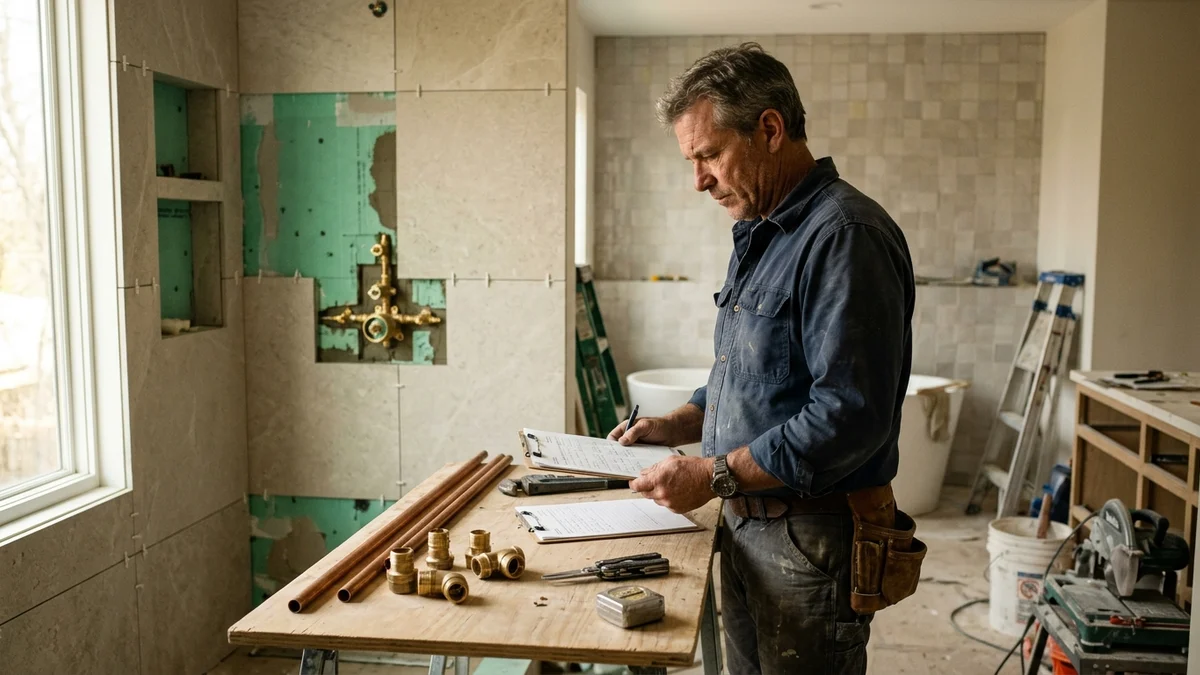
Create a Tasmania Invoice or Estimate with Your License Number
Generate a clean, itemized Tasmania estimate and invoice PDF pre-loaded with Consumer, Building and Occupational Services (CBOS Tasmania) disclosure notes.
Next
How do I actually get paid?
Appliance Repair Customer Won't Pay? Hold the Unit or Send a Demand
When the first job is booked, Keel keeps the invoices and receipts for it.How do I actually get paid?
Knowledge Graph · Interactive Mind Map